🎯 Why 2026 Is the Make-or-Break Year for Creators
If you make videos, write blogs, design visuals, produce music, or build digital experiences—2026 isn’t just another year. It’s a turning point.
After the experimental whirlwind of 2023–2024, AI is no longer a novelty. It’s infrastructure. By 2026, AI won’t sit next to your workflow—it is your workflow.
But here’s the catch: AI won’t reward passive users. It will reward those who understand its rules, leverage its precision, and—most importantly—embed their human voice at the center of it all.
Regulatory shifts (like the EU AI Act), advances in multimodal models, the rise of AI agents, and new expectations around transparency mean creators now operate in a landscape that’s both more powerful and more accountable than ever.
This guide isn’t hype. It’s your strategic playbook—25 essential AI trends distilled into real-world actions, risks, and opportunities. Whether you’re a solo YouTuber, indie game dev, podcast host, or digital artist, this is your roadmap to thrive in 2026.
💡 Pro Tip: Bookmark this. Revisit it quarterly. The pace won’t slow down—but you can stay ahead.
🧠 The Big Shift: From “AI as Tool” to “AI as Team Member”
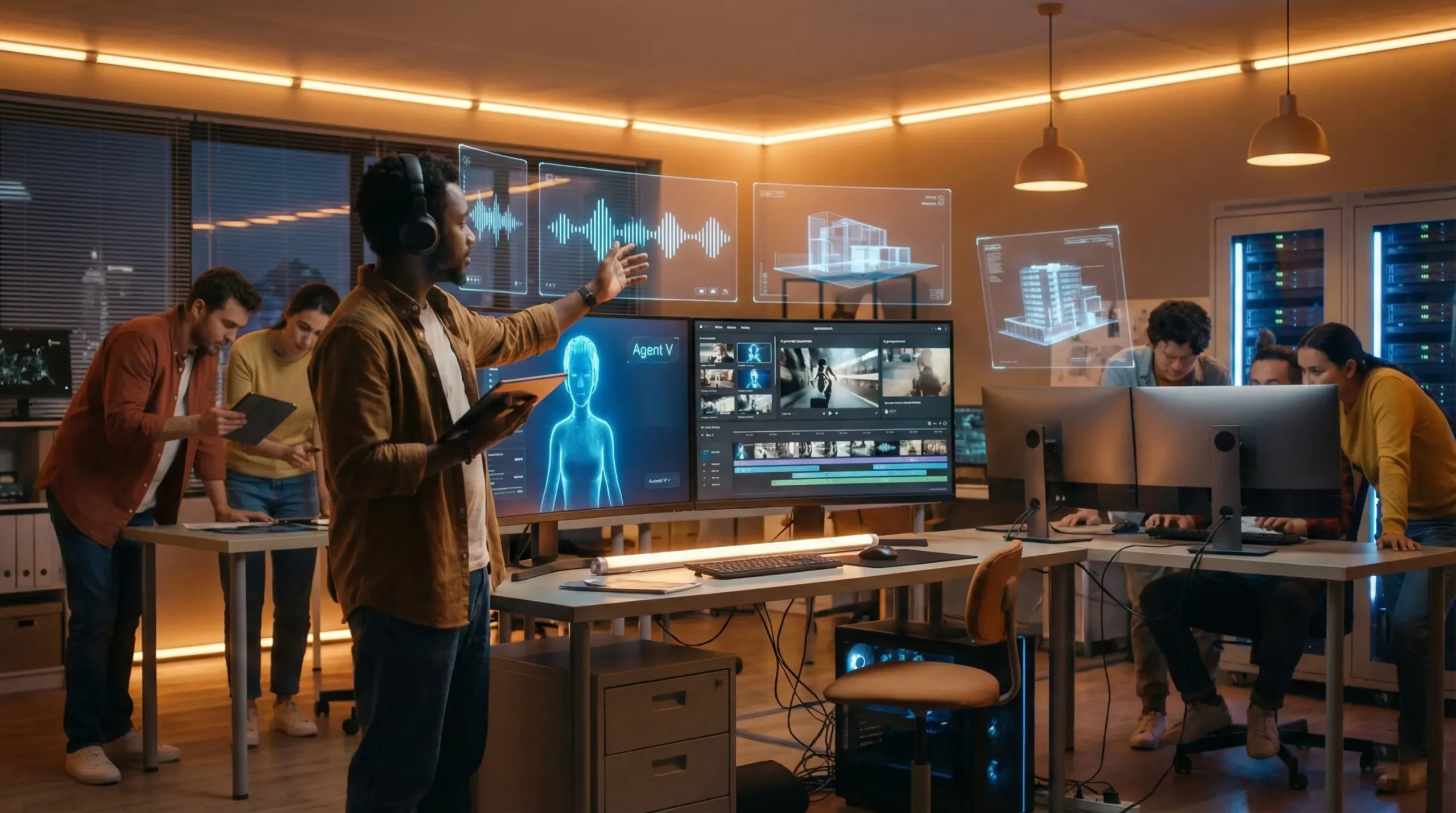
Just two years ago, AI was a plugin—a voice generator, a thumbnail maker, a script helper.
In 2026? AI is your collaborator.
It books research, edits footage, A/B tests headlines, dubs videos into Hindi, and even suggests narrative arcs for your podcast—all while you sleep. But this power comes with new responsibilities:
- You must label AI-generated content (thanks to EU regulations).
- You must verify training data sources (copyright lawsuits are rising).
- You must retain human oversight (AI can’t be trusted to publish unchecked).
The winners won’t be those with the flashiest AI—they’ll be those who systematize trust, creativity, and compliance into one seamless flow.
🔥 The Top 25 AI Trends for Creators in 2026
We’ve grouped these into 5 strategic pillars: Creation, Collaboration, Compliance, Monetization, and Control. Each trend includes what it is, why it matters, real use cases, risks, and how to prepare.
🎨 Pillar 1: Smarter, Faster, More Personal Creation
Trend 1: Generative AI Goes Fully Multimodal
What it is: One AI model that processes text, image, video, audio, and code in a single session. Think: “Make a 60-second video from this blog post, with cinematic music and a warm filter.” Done.
Why it matters: No more juggling 5 apps. You’ll create entire campaigns in one workflow.
Use case: A podcaster writes show notes → AI generates a YouTube Short, Instagram Reel, LinkedIn post, and newsletter—all styled consistently.
Risk: Higher compute costs. Copyright gray zones (e.g., whose music is that?).
Prepare: Learn prompt chaining (e.g., “First generate script → then storyboard → then animate”). Use platforms like Runway ML or HeyGen that support cross-modal workflows.
Trend 2: AI Agents Become Your Persistent Creative Partner
What it is: Not just chatbots—autonomous agents that act on your behalf: research topics, draft social posts, analyze performance, and iterate content.
Why it matters: Your AI doesn’t just respond—it anticipates.
Use case: An agent notices your TikTok retention drops at 8 seconds → auto-generates 3 new hooks → schedules A/B test.
Risk: Hallucinations, brand misalignment, over-automation.
Prepare: Always require human approval before publishing. Use tools with override/veto buttons (e.g., CrewAI, AutoGen).
Trend 3: Domain-Specific LLMs (DSLMs) Outperform Giants
What it is: Smaller AI models fine-tuned for your niche—like fashion, filmmaking, or legal blogging.
Why it matters: They’re faster, cheaper, and more accurate than GPT-5 for specialized tasks.
Use case: A DSLM trained on 10,000 documentary scripts suggests cuts, transitions, and archival sources based on your rough cut.
Risk: Limited general knowledge. Requires quality training data.
Prepare: Explore open models like Mistral or Llama 3—fine-tune them on your past work using LoRA or Unsloth.
Trend 4: AI-Native Editing Tools Replace Traditional Software
What it is: Editors like Descript, CapCut, or Adobe Firefly now let you edit by voice or text: “Shorten Scene 2 by 10 seconds and boost vocals.”
Why it matters: Post-production time drops from hours to minutes.
Use case: A travel vlogger fixes shaky footage, replaces sky, and adds subtitles—all via prompts on a phone.
Risk: Over-reliance leads to style homogenization (everything starts looking “AI-clean”).
Prepare: Build a personal style guide. Save manual override presets for key aesthetics (e.g., film grain, color palette).
Trend 5: Prompt-Based Design Takes Over
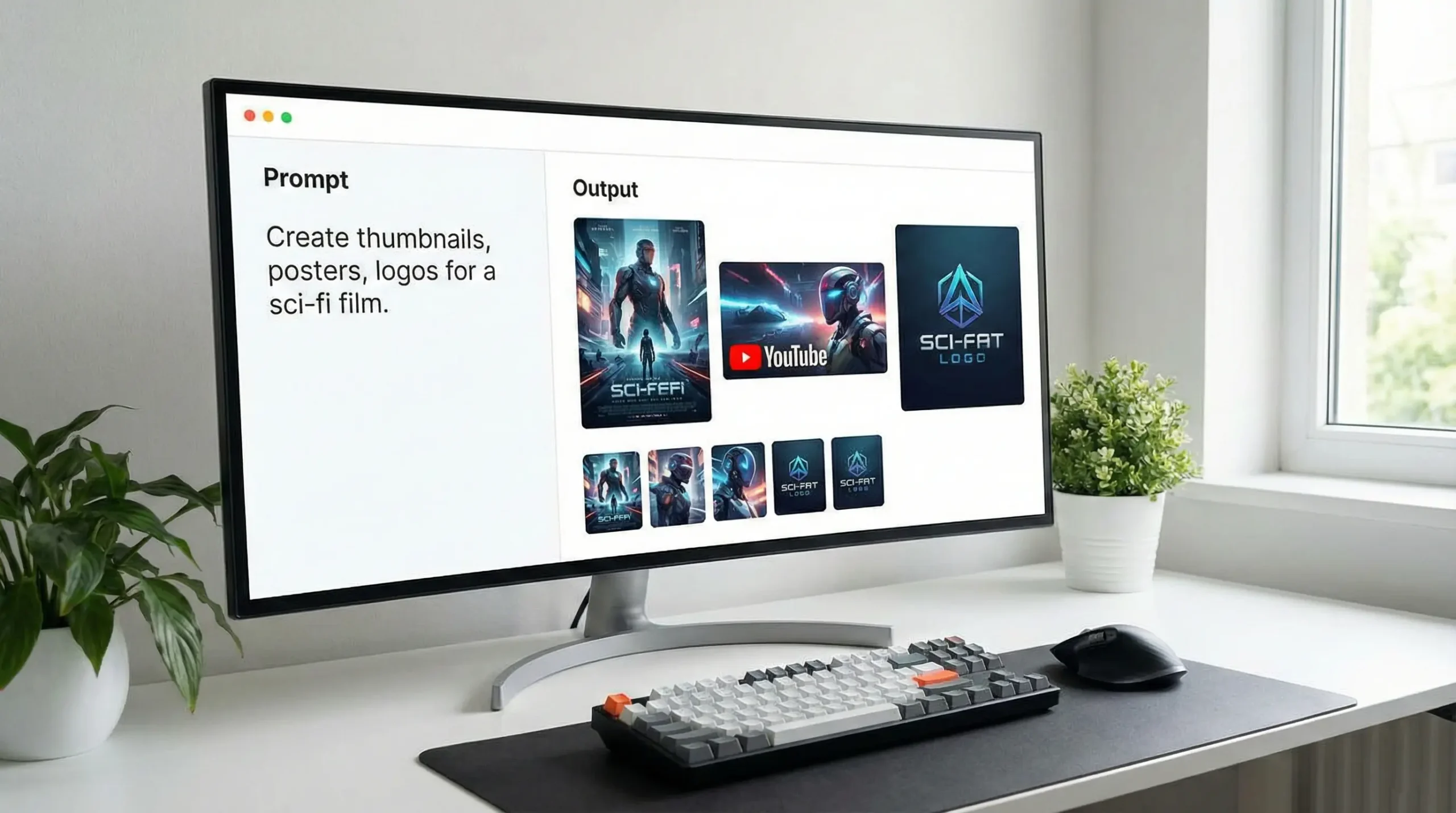
What it is: No more Photoshop layers. You describe what you want: “Minimalist YouTube thumbnail with fire emoji, bold red text, and dark gradient background.”
Why it matters: Design skill = prompt skill.
Use case: A blogger generates 50 social graphics for a book launch in 10 minutes.
Risk: Generic outputs. Loss of brand uniqueness.
Prepare: Save your best prompts as templates. Add brand-specific keywords (“use our brand font: Montserrat Bold”).
🤝 Pillar 2: AI as Your Creative Collaborator
Trend 6: Personal AI Assistants Trained on YOU
What it is: An AI that ingests your past content, audience data, and goals to become your creative twin.
Why it matters: It doesn’t just help—it understands.
Use case: Your AI suggests: “Your audience loves ‘behind-the-scenes’—turn your failed experiment into a Story.”
Prepare: Feed your assistant structured data (transcripts, analytics, style notes). Platforms like Cursor or Syllaby are early leaders.
Trend 7: AI Co-Writing for Complex Narratives
What it is: AI helps manage branching storylines in games, podcasts, or interactive videos—keeping characters consistent across 100+ dialogue paths.
Why it matters: Solo creators can now build narrative depth once reserved for studios.
Use case: A game dev uses AI to maintain NPC personality across 500+ lines of dialogue.
Risk: Plot holes, tonal drift.
Prepare: Maintain a “story bible” and require AI to reference it before generating new content.
Trend 8: Real-Time AI Editing (Even on Mobile)
What it is: Live background blur, auto-captioning, lighting correction—on your phone.
Why it matters: Professional quality without gear.
Use case: A live streamer replaces their messy room with a virtual studio—no green screen needed.
Prepare: Test on-device AI apps like CapCut Mobile or Adobe Podcast.
Trend 9: AI Community Management
What it is: AI moderates comments, replies to DMs, and flags toxicity—freeing you from burnout.
Why it matters: You get more connection, less chaos.
Use case: AI replies to “When’s the next video?” with your upload schedule—while you focus on creating.
Prepare: Set tone guidelines (“friendly but not salesy”) and review logs weekly.
⚖️ Pillar 3: Compliance, Ethics & Trust
Trend 10: AI Content Labeling Becomes Mandatory
What it is: The EU AI Act (rolling out through 2026–2027) requires clear labeling of AI-generated content. Platforms like YouTube and Instagram will enforce this.
Why it matters: No label = demonetization or penalties.
Use case: Your AI video editor auto-adds a discreet “AI-assisted” watermark in the corner.
Prepare: Integrate provenance metadata now. Tools like Adobe Content Credentials or Truepic help.
Trend 11: Training Data Transparency & Opt-Outs
What it is: You can no longer train models on scraped public data without checking copyright opt-outs.
Why it matters: Using unlicensed data = legal risk.
Use case: You fine-tune a voice model—but only on licensed voice libraries (e.g., ElevenLabs Creator Voices).
Prepare: Use licensed datasets. Document your data sources like a supply chain.
Trend 12: Ethics Tooling & Governance-as-Code
What it is: AI tools now include policy engines that block content violating hate speech, privacy, or brand rules—before it’s published.
Why it matters: Prevent reputational disasters automatically.
Use case: Your AI refuses to generate a “deepfake” of a celebrity—even if prompted.
Prepare: Define your ethical boundaries in writing. Use platforms with custom policy rules.
💰 Pillar 4: Monetization & Business Models
Trend 13: Creators Monetize AI Workflows Directly
What it is: Offer AI-powered microservices: personalized video messages, custom intros, voice clones for fans.
**Why it matters: New revenue streams with near-zero marginal cost.
Use case: A fitness coach sells “custom workout videos” with your name and progress—AI-generated in real time.
Risk: Voice/image misuse.
Prepare: Require explicit consent. Use clear TOS. Price transparently.
Trend 14: Generative Commerce & Shoppable AI
What it is: AI scans your video and auto-inserts shoppable links: “This pan → $29 on Amazon.”
Why it matters: Direct monetization without manual tagging.
Use case: A chef’s recipe video links every ingredient/tool as they appear.
Prepare: Integrate affiliate platforms (e.g., LTK, Impact) with AI tools like Shopify Magic.
Trend 15: Creator-First Pricing & Micropayments
What it is: Pay-per-use models: $0.10 per AI-generated thumbnail, $2 per voiceover.
Why it matters: Match costs to revenue. No more bloated subscriptions.
Prepare: Track per-asset costs. Test pricing with a small audience first.
🛡️ Pillar 5: Control, Choice & Future-Proofing
Trend 16: On-Device AI Hardware (Privacy + Speed)
What it is: iPhones and Android phones run small LLMs locally—no cloud needed.
Why it matters: Work offline. Keep data private. Lower latency.
Use case: Dub your video into Spanish while on a flight—no internet required.
Prepare: Design hybrid workflows: on-device for speed, cloud for quality.
Trend 17: Interoperability Standards Emerge
What it is: Open formats for prompts, models, and metadata—so you’re not locked into one platform.
Why it matters: Switch AI providers without losing your work.
Prepare: Store prompts in plain text files. Use open APIs (e.g., OpenAI-compatible endpoints).
Trend 18: Human Curation Becomes Premium
What it is: As AI floods the market, “human-made” becomes a luxury signal.
Why it matters: Audiences pay more for authenticity.
Use case: A “Hand-Edited” series showing your creative decisions behind AI-assisted content.
Prepare: Show your process. Document the human-AI collaboration.
Trend 19: Synthetic Data & Simulated Worlds Power Safer AI Training
What it is: As real-world data becomes harder to use due to privacy laws and copyright restrictions, AI models are increasingly trained on synthetic (artificially generated) data—like simulated camera movements, AI-written dialogues, or rendered 3D scenes.
Why it matters: This lets creators build powerful AI tools without violating privacy or scraping unlicensed content. For example, a virtual cinematographer AI can learn lighting and composition from millions of simulated film sets—not real directors’ footage.
Use case: An indie game studio trains an NPC behavior model using synthetic player interactions, avoiding the need to collect real user data during early development.
Risk: Synthetic data can introduce bias or “unrealistic” patterns—your AI might excel in simulation but fail in the real world.
Prepare: Always blend synthetic data with real-world validation. Run human-in-the-loop tests on outputs. Platforms like NVIDIA Omniverse or Synthesis AI offer high-fidelity synthetic datasets for creators.
Trend 20: AI for Accessibility & Localization Reaches New Heights
What it is: AI now delivers real-time, emotionally intelligent dubbing, accurate captions, and cultural adaptation—not just word-for-word translation, but tone-matched localization.
Why it matters: You can reach global audiences without a localization team. A cooking video in English can auto-dub into Brazilian Portuguese with the same warmth and pacing—right down to regional slang.
Use case: A documentary filmmaker releases episodes simultaneously in Arabic, Hindi, and Spanish, with AI adjusting gestures and references for cultural relevance.
Risk: AI still misses subtle cultural nuances—like humor, religious context, or historical sensitivity.
Prepare: Always partner with native-speaking editors for final quality control. Use tools like HeyGen, Rask AI, or Deepdub that offer emotion-aware voice cloning and cultural adaptation layers. Treat AI as your first draft—not your final voice.
Trend 21: Better Voice & Character Modeling—With Built-In Ethics
What it is: Voice cloning is no longer the Wild West. In 2026, ethical voice platforms require explicit consent, offer licensed celebrity or creator voices, and embed usage rights directly into the audio file.
Why it matters: You can now safely use AI voices for narration, interactive stories, or personalized fan messages—without risking lawsuits or backlash.
Use case: A children’s content creator licenses a “friendly robot” voice from a studio-approved library, uses it across 100+ episodes, and pays royalties automatically via smart contracts.
Risk: Unauthorized voice replication remains a threat. Even well-intentioned projects can face reputational damage if audiences feel deceived.
Prepare: Only use licensed, consent-based voice libraries (e.g., ElevenLabs’ Voice Library, Respeecher, or Adobe Podcast’s voice tools). Always disclose when a voice is synthetic in your video descriptions or audio disclaimers.
Trend 22: Interoperability Standards Finally Emerge
What it is: After years of vendor lock-in, open standards for prompts, model outputs, and metadata are gaining traction—thanks to pressure from regulators and creators alike.
Why it matters: You’ll finally be able to move your AI workflows between platforms. Your custom prompt library won’t vanish if you switch from MidJourney to Stable Diffusion or from OpenAI to Claude.
Use case: A design studio exports all their brand-consistent image prompts in a universal format, then imports them into a new AI tool during a platform migration—no manual rewrites needed.
Risk: Standards are still evolving. Early adoption might mean temporary compatibility hiccups.
Prepare: Store your prompts and assets in plain text, JSON, or open formats like ONNX or OpenAPI. Avoid proprietary file types. Follow initiatives like the Partnership on AI or W3C’s Verifiable Credentials for future-proofing.
Trend 23: Creators Demand Greener, More Efficient AI
What it is: As AI’s carbon footprint comes under scrutiny, lightweight, energy-efficient models are being marketed specifically to creators—especially those working on mobile or with limited budgets.
Why it matters: Smaller models = lower costs + lower environmental impact. You don’t always need a 100B-parameter model to generate a social thumbnail or clean up audio.
Use case: A travel vlogger uses an on-device AI to denoise their interview audio while hiking—no cloud needed, no data sent, minimal battery drain.
Risk: Ultra-efficient models may sacrifice nuance or quality in complex tasks like scriptwriting or color grading.
Prepare: Benchmark models by task. Use small models for repetitive, low-stakes work (e.g., captioning). Reserve cloud-based giants for high-impact creative decisions. Track your usage with tools like CodeCarbon or ML CO2 Impact.
Trend 24: AI Co-Directing for Narrative Complexity
What it is: Beyond generating lines, AI now helps structure complex stories—tracking character arcs, emotional pacing, and plot consistency across games, serialized podcasts, or interactive films.
Why it matters: Solo creators can now manage Hollywood-level narrative depth without a writers’ room.
Use case: A narrative game developer uses an AI “story engine” to ensure that a player’s choice in Episode 1 still impacts dialogue in Episode 5—maintaining continuity across 200+ branching paths.
Risk: Over-reliance can lead to mechanical storytelling—emotionally flat or formulaic plots.
Prepare: Keep a living story bible (characters, timelines, themes) and require the AI to reference it before generating new scenes. Always do a human emotional pass—ask: “Does this feel right?”
Trend 25: Platform Wars & Consolidation—Choose Partners Wisely
What it is: The AI market is consolidating fast. Big tech (Google, Meta, Apple, Microsoft) and well-funded startups are locking down ecosystems—offering bundled tools, compliance features, and exclusive models.
Why it matters: Your choice of AI platform now affects your legal risk, creative control, and long-term costs. A “cheap” model today might become expensive—or non-compliant—tomorrow.
Use case: A European creator chooses a provider with built-in EU AI Act compliance (like automatic labeling and data disclosure) over a cheaper U.S.-only alternative to avoid future penalties.
Risk: Vendor lock-in. If your entire workflow depends on one platform, switching becomes painful and expensive.
Prepare: Build modular, abstracted pipelines. Use middleware like LangChain or LlamaIndex that let you swap model backends with minimal code changes. Always ask vendors: “Do you support open standards and data export?”
✅ Your 2026 Creator Action Plan: A Practical Checklist
Don’t get overwhelmed. Start here:
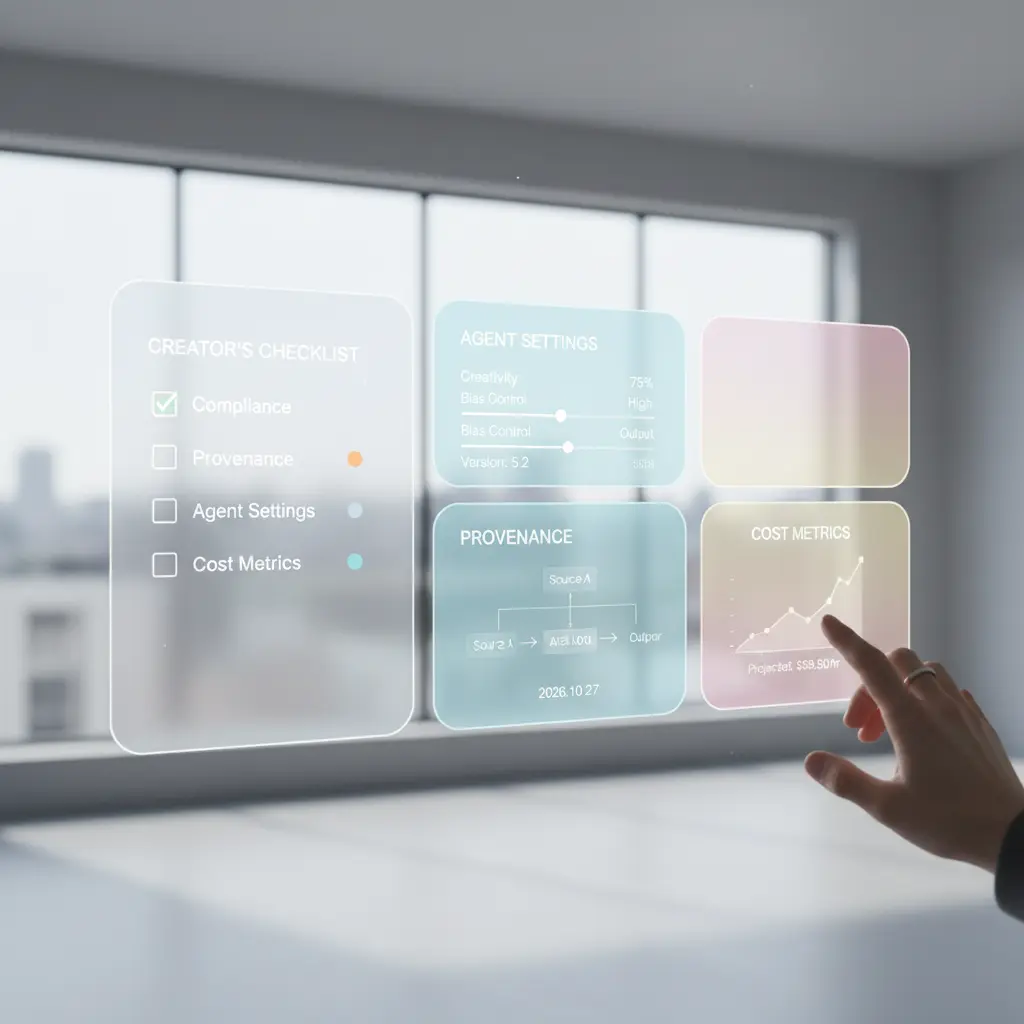
- Audit your AI tools for EU AI Act compliance (labeling, data transparency).
- Pilot one multimodal workflow (e.g., blog → video → social clips).
- Add provenance metadata to all AI-generated assets.
- Identify one repetitive task—replace it with a domain-specific LLM.
- Set human-in-the-loop gates for publishing, legal, and brand decisions.
- Track AI costs per project—avoid bill shock.
🆚 Big Models vs. Niche Models: Which Should You Use?
| General Models (GPT-5, Gemini) | Domain-Specific LLMs |
|---|---|
| ✅ Broad knowledge | ✅ Hyper-accurate for your niche |
| ✅ Great for brainstorming | ✅ Cheaper & faster |
| ❌ Expensive | ❌ Narrow scope |
| ❌ Provenance risks | ❌ Need quality training data |
Verdict: Use general models for ideation, DSLMs for production.
❓ FAQs: Your Top 2026 AI Questions—Answered
Q: Do I need to stop using AI because of the EU AI Act?
A: No—but start labeling AI content and ask vendors about data sources.
Q: Will AI make creators obsolete?
A: No. AI replaces tasks, not taste. Human curation is now a premium skill.
Q: Should beginners use AI?
A: Absolutely. It lowers barriers to entry—just stay ethical and transparent.

🌟 Final Thought: AI Is Your Amplifier—Not Your Replacement
2026 belongs to creators who harness AI without hiding behind it.
The future isn’t faceless AI avatars. It’s you, scaling your voice, protecting your integrity, and connecting deeper—because AI handled the busywork.
Your move:
- Learn one new AI skill this month.
- Add provenance to your next video.
- Let AI draft—then edit with heart.
Because in 2026, the most powerful AI is the one that helps you be more human.