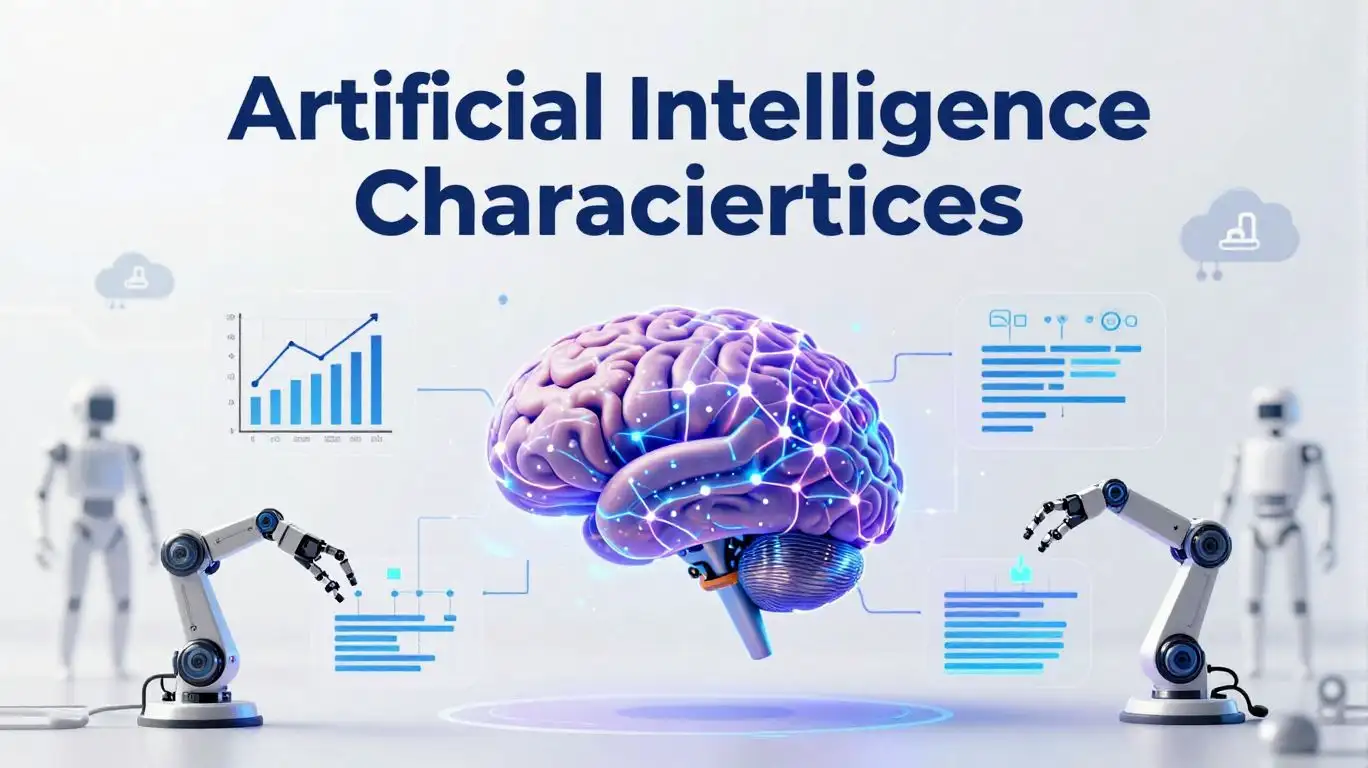
Artificial Intelligence Characteristics: Artificial Intelligence (AI) is no longer a futuristic concept—it is already shaping how people in the Universe live, work, and interact with technology. From voice assistants like Siri and Alexa to self-driving cars, recommendation systems, and medical diagnosis tools, AI has become a core part of modern life.
But what actually makes a system “artificially intelligent”?
To truly understand AI, you must first understand the key characteristics of artificial intelligence. These characteristics explain how AI systems think, learn, adapt, and make decisions, and why they are different from traditional software programs.
In this in-depth guide, we’ll break down the most important artificial intelligence characteristics, explained in simple language with real-world examples—especially relevant to businesses, students, and professionals.
What Are Artificial Intelligence Characteristics?
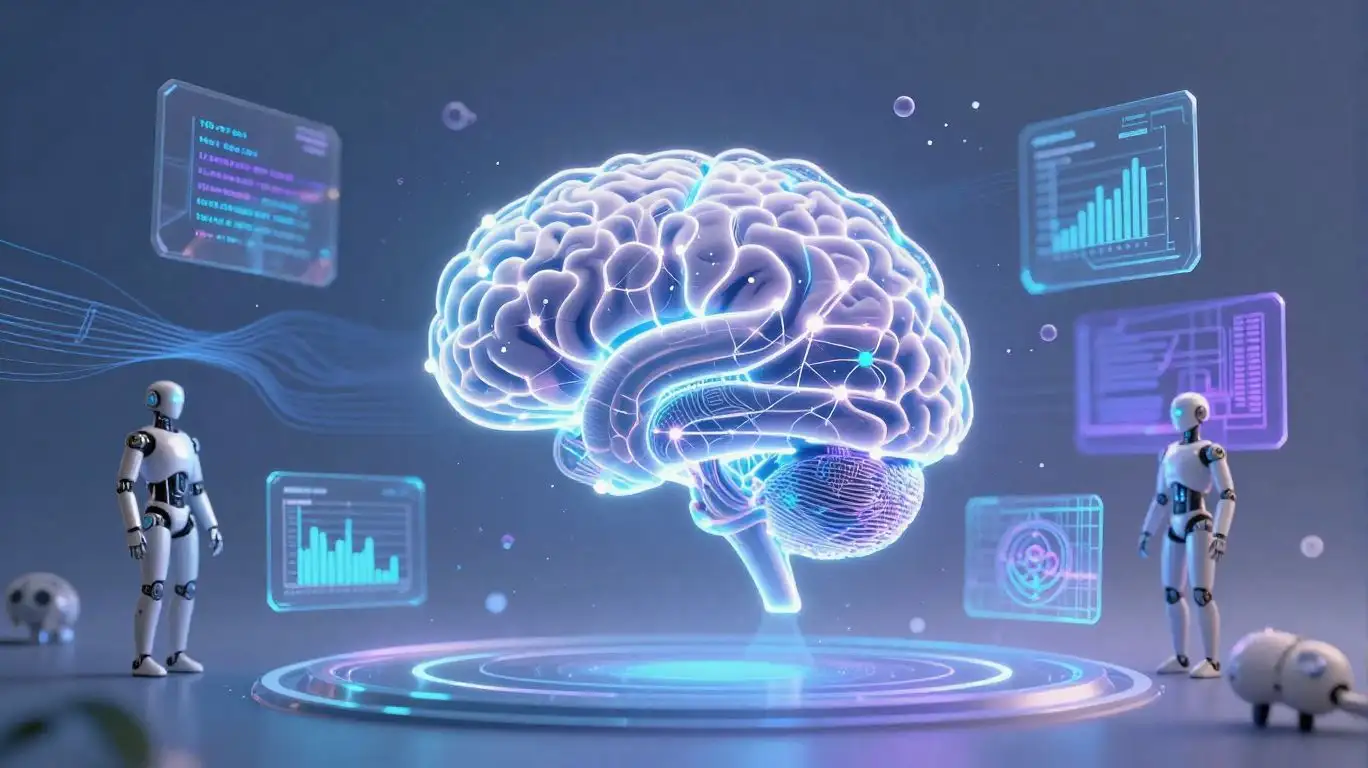
Artificial intelligence characteristics are the core traits and abilities that allow an AI system to perform tasks that normally require human intelligence.
Unlike traditional software that follows fixed rules, AI systems can:
- Learn from data
- Adapt to new situations
- Make decisions
- Improve over time
These characteristics are what power modern AI applications across healthcare, finance, education, transportation, and entertainment in the US.
How Artificial Intelligence Is Different From Traditional Software
To truly understand the characteristics of artificial intelligence, it’s important to compare AI with traditional software systems. Many people assume AI is just “advanced programming,” but the difference is much deeper.
Traditional Software Characteristics
Traditional programs:
- Follow fixed, rule-based instructions
- Cannot learn beyond what is programmed
- Fail when encountering unexpected situations
- Require manual updates for improvement
Example:
A calculator will always follow predefined mathematical rules. It cannot learn user behavior or improve performance on its own.
Artificial Intelligence Characteristics
AI systems:
- Learn from data instead of fixed rules
- Adapt to new situations
- Improve performance over time
- Make probabilistic decisions
Example:
A fraud detection AI used by US banks continuously learns new fraud patterns as criminals change their methods.
This ability to learn, adapt, and evolve is what fundamentally separates AI from traditional software.
1. Learning Ability (Most Important AI Characteristic)
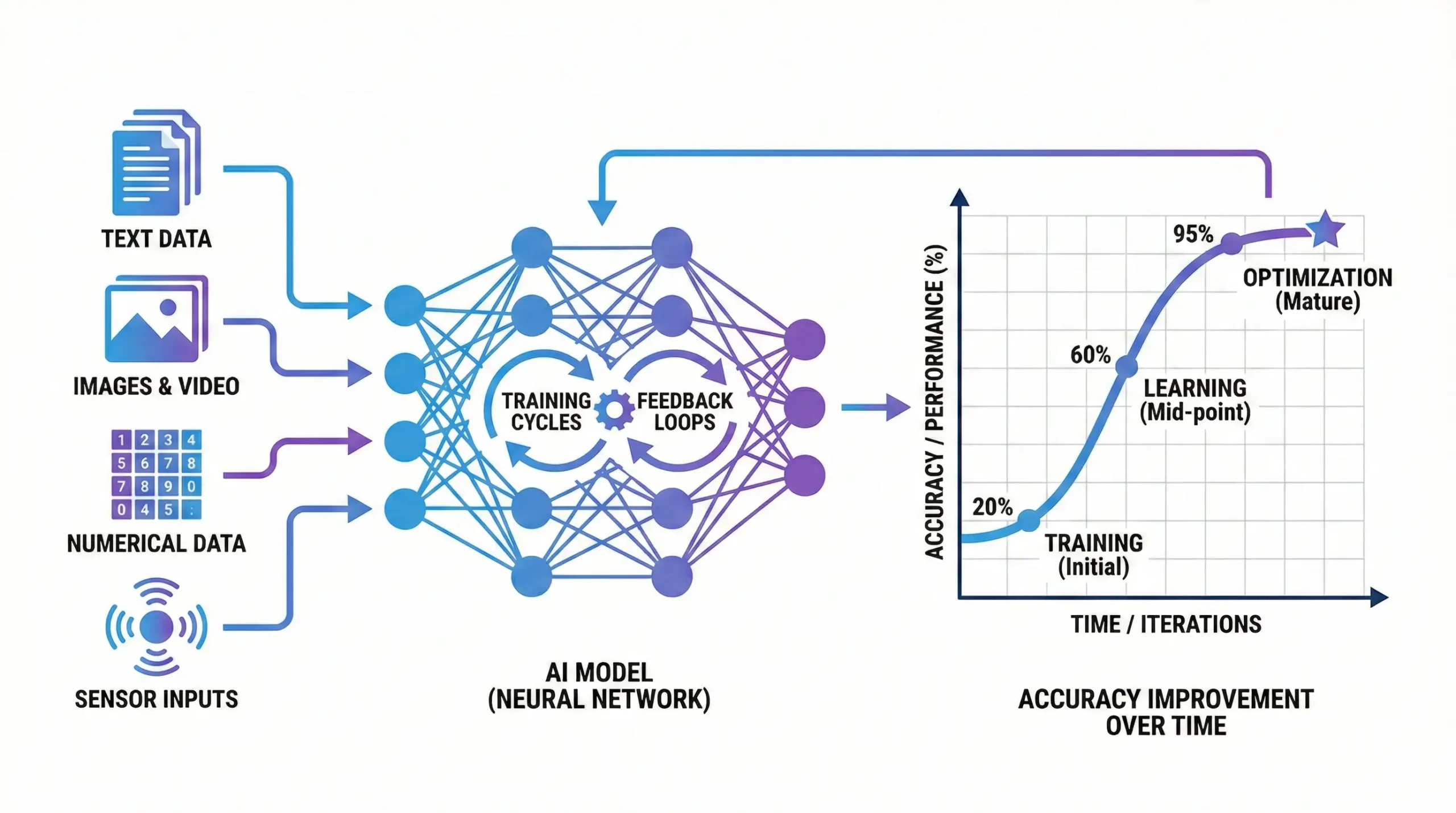
One of the defining characteristics of artificial intelligence is its ability to learn from data.
AI systems do not need to be programmed with every possible rule. Instead, they analyze large datasets and identify patterns.
How AI Learning Works
- Uses machine learning algorithms
- Improves accuracy with more data
- Learns from past mistakes
- Updates models continuously
Real-World US Examples
- Netflix learning what shows Americans prefer
- Google improving search results
- Credit card fraud detection in US banks
Types of Learning in Artificial Intelligence
Learning is the most important characteristic of artificial intelligence—but AI doesn’t learn in just one way. There are multiple learning approaches, each with different capabilities.
1. Supervised Learning
AI learns from labeled data.
Example (US context):
- Email spam detection
- Medical diagnosis systems trained on labeled patient data
2. Unsupervised Learning
AI finds patterns without labeled data.
Example:
- Customer segmentation in US retail
- Market trend analysis
3. Reinforcement Learning
AI learns by trial and error using rewards.
Example:
- Self-driving car decision-making
- Robotics and game-playing AI
4. Self-Learning Systems
Advanced AI systems improve automatically as more data becomes available.
These learning methods expand AI’s adaptability, autonomy, and intelligence.
2. Reasoning and Decision-Making
Another core artificial intelligence characteristic is logical reasoning.
AI systems can:
- Analyze information
- Compare multiple options
- Choose the best possible outcome
This is especially important in industries like healthcare, defense, and finance in the United States.
Example
- AI medical tools assisting doctors in diagnosis
- Automated trading systems in US stock markets
- Smart traffic control systems
3. Explainability and Transparency as Emerging AI Characteristics
One of the most important evolving characteristics of artificial intelligence—especially in the United States—is explainability.
What Is Explainable AI (XAI)?
Explainable AI allows humans to:
- Understand how decisions are made
- Trust AI systems
- Identify bias or errors
This is critical in industries like:
- Healthcare
- Finance
- Criminal justice
- Insurance
Why Explainability Matters in the US
US regulations and ethical standards increasingly require:
- Transparency in automated decisions
- Accountability for AI outcomes
Example:
If an AI system denies a loan, the customer must understand why.
Explainability is becoming a core AI characteristic, not just an optional feature.
4. Problem-Solving Capability
AI systems are designed to solve complex problems that are difficult for traditional programs.
This includes:
- Optimization problems
- Pattern recognition
- Strategic planning
Example
- Route optimization for delivery companies like UPS and Amazon
- Chess and Go-playing AI systems
- Logistics planning in supply chains
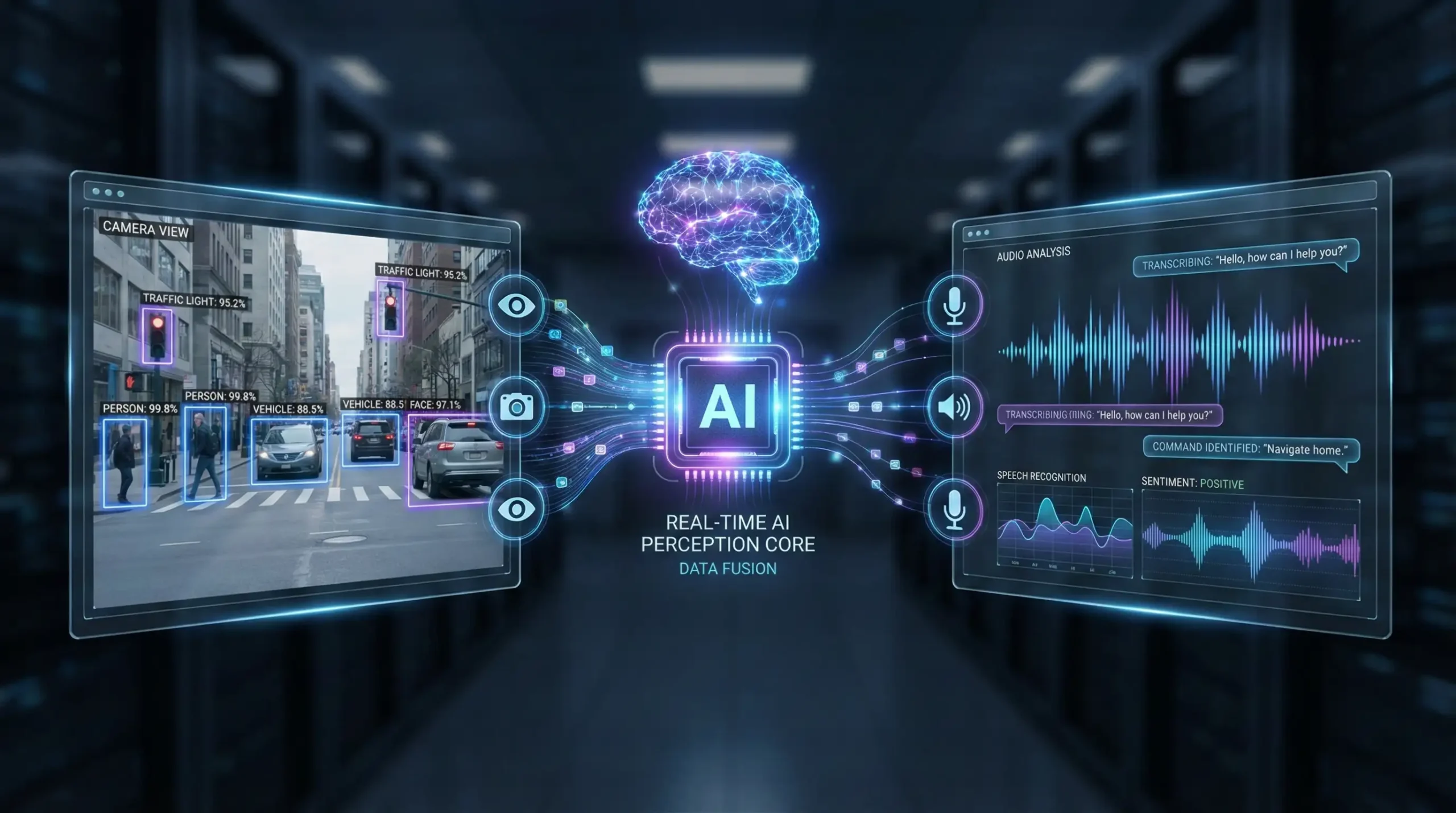
5. Perception (Understanding the Environment)
Perception is a powerful characteristic of artificial intelligence that allows machines to interpret sensory data such as images, audio, and video.
AI uses:
- Computer vision
- Speech recognition
- Sensor data
US-Based Examples
- Facial recognition for device security
- Voice assistants understanding spoken commands
- Autonomous vehicles detecting roads and obstacles
6. Context Awareness in Artificial Intelligence
Beyond perception, advanced AI systems demonstrate context awareness—the ability to understand situations, not just raw data.
What Context Awareness Means
AI can:
- Adjust responses based on user behavior
- Understand location, time, and intent
- Modify output dynamically
Examples
- Voice assistants understanding follow-up questions
- Smart home systems adjusting temperature based on routines
- AI customer support recognizing returning users
Context awareness improves:
- Accuracy
- User experience
- Personalization
This characteristic is critical for modern AI applications in the US consumer market.
7. Natural Language Understanding
Modern AI systems can understand, interpret, and generate human language.
This characteristic powers:
- Chatbots
- Virtual assistants
- Customer support automation
Examples
- AI chat support for US businesses
- Voice search on smartphones
- AI-generated content and summaries
Natural language processing (NLP) allows AI to interact with humans more naturally than ever before.
8. Generative Capabilities as a Core AI Characteristic
One of the most visible characteristics of modern artificial intelligence is generation.
What Is Generative AI?
Generative AI can:
- Write text
- Create images
- Generate music
- Produce code
Examples in the US
- AI-generated marketing content
- Chatbots and virtual assistants
- Image generation tools
- AI-powered coding assistants
Generative capability represents a major shift—from AI that analyzes data to AI that creates new content.Generative Capabilities as a Core AI Characteristic
One of the most visible characteristics of modern artificial intelligence is generation.
What Is Generative AI?
Generative AI can:
- Write text
- Create images
- Generate music
- Produce code
Examples in the US
- AI-generated marketing content
- Chatbots and virtual assistants
- Image generation tools
- AI-powered coding assistants
Generative capability represents a major shift—from AI that analyzes data to AI that creates new content.
9. Adaptability and Self-Improvement
Unlike static software, AI systems can adapt to changing conditions.
This characteristic allows AI to:
- Update predictions
- Adjust behavior
- Improve accuracy over time
Example
- Recommendation systems updating user preferences
- Smart home devices learning routines
- AI cybersecurity tools adapting to new threats
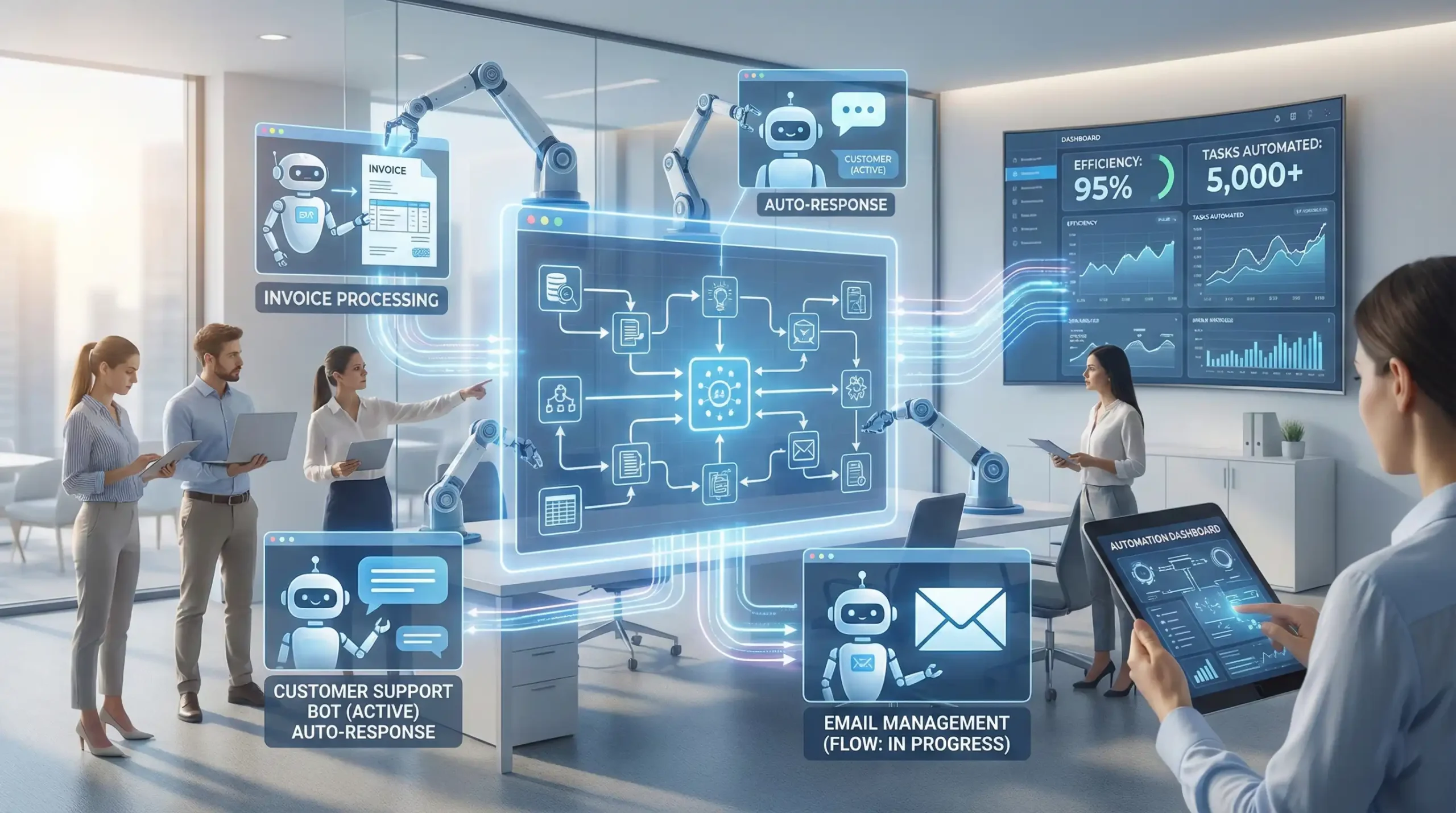
10. Automation Capability
Automation is one of the most widely used characteristics of artificial intelligence in the US economy.
AI can:
- Perform repetitive tasks
- Operate 24/7
- Reduce human error
Industries Impacted
- Manufacturing
- Customer service
- Healthcare administration
- Finance and accounting
11. Accuracy and Consistency
AI systems deliver high accuracy and consistent performance, especially when trained with quality data.
Unlike humans, AI does not:
- Get tired
- Lose focus
- Make emotional decisions
Example
- Medical imaging analysis
- Quality inspection in factories
- Financial risk assessment
12. Scalability
Scalability is a crucial artificial intelligence characteristic for modern businesses.
AI systems can:
- Handle millions of users
- Process massive datasets
- Scale across cloud infrastructure
This is why large US tech companies rely heavily on AI for global operations.
13. Predictive Capability
AI excels at predicting future outcomes based on historical data.
Examples
- Demand forecasting in retail
- Weather prediction
- Market trend analysis
Predictive AI is widely used in US industries to reduce risk and improve planning.
14. Real-Time Processing as an Advanced AI Characteristic
Many modern AI systems operate in real time, processing data instantly.
Examples
- Fraud detection during transactions
- Live traffic routing
- Real-time recommendation engines
Real-time processing enhances:
- Safety
- Accuracy
- Efficiency
This characteristic is crucial for industries like transportation, cybersecurity, and finance.
15. Limited Emotional Intelligence (Current Limitation)
While AI can simulate emotions, it does not truly feel emotions.
This is an important characteristic to understand:
- AI mimics empathy using data
- Responses are pattern-based
- No real consciousness or feelings
This limitation is critical in ethical discussions around AI use.
16. Goal-Oriented Behavior
AI systems operate with defined objectives.
They optimize actions to:
- Achieve goals
- Maximize efficiency
- Minimize errors
Example: An AI recommendation engine aims to maximize user engagement.
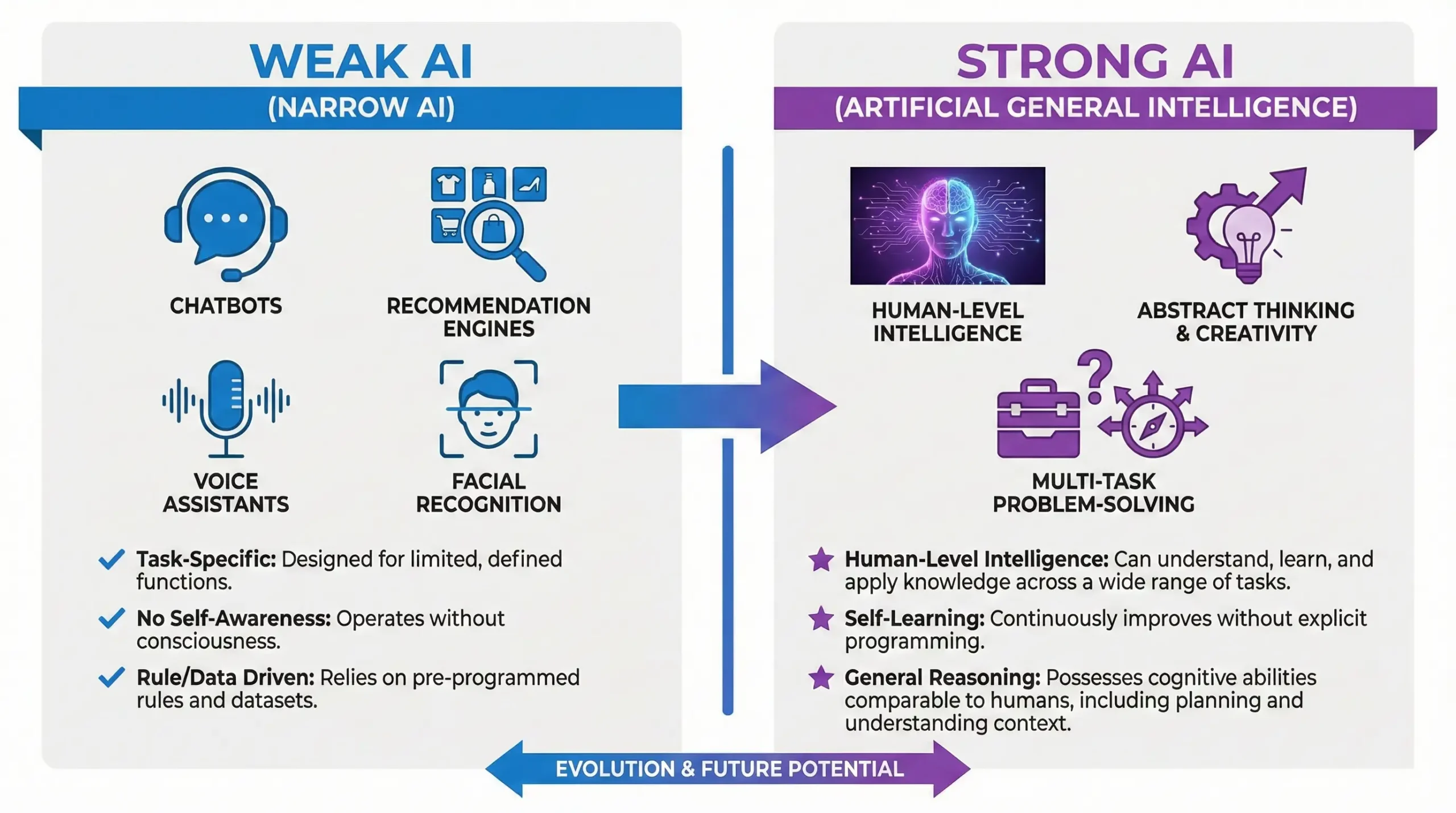
Strong vs Weak AI Characteristics
Weak AI (Narrow AI)
- Task-specific
- No general intelligence
- Most AI today falls into this category
Strong AI (Theoretical)
- Human-level intelligence
- Self-awareness
- Not yet achieved
Why Understanding AI Characteristics Matters
Understanding artificial intelligence characteristics helps:
- Businesses adopt AI correctly
- Students learn AI fundamentals
- Policymakers create informed regulations
- Consumers trust AI responsibly
In the United States, AI literacy is becoming increasingly important across education and industry.
Future Evolution of AI Characteristics
In the coming years, AI characteristics are expected to evolve with:
- Better reasoning
- Improved explainability
- Stronger ethical controls
- More human-like interaction
However, true human-level intelligence remains a long-term goal.
Frequently Asked Questions (FAQ)
1. What are the main characteristics of artificial intelligence?
Learning, reasoning, perception, adaptability, automation, and decision-making.
2. Is learning the most important AI characteristic?
Yes, learning enables AI systems to improve over time.
3. Does AI have emotions?
No, AI simulates emotions but does not truly feel them.
4. Where is AI most used in the US?
Healthcare, finance, retail, transportation, and technology.
5. Can AI replace humans completely?
No, AI supports humans but cannot fully replace human judgment and creativity.
Conclusion
The characteristics of artificial intelligence define what makes AI powerful, adaptable, and valuable in today’s world. From learning and reasoning to automation and prediction, these traits allow AI systems to solve problems at scale—especially across industries in the United States.
As AI continues to evolve, understanding its characteristics is essential for using it responsibly, effectively, and ethically.
Artificial intelligence is not just about machines—it’s about how intelligently we design and use them.